
Artificial Intelligence is transforming the global cybersecurity landscape, strengthening cyber defences while simultaneously enabling faster, more sophisticated attacks. According to the World Economic Forum’s Global Cybersecurity Outlook 2026, 94% of organisations expect AI to be the biggest driver of cybersecurity change over the coming year, while 87% identify AI-related vulnerabilities as the fastest-growing cyber-risk.
Against this backdrop, GISEC Global 2026, organised by inD, a joint venture between the Dubai World Trade Centre (DWTC) and Informa, enters a new chapter at Dubai Exhibition Centre, Expo City Dubai, from 16–18 September 2026 under the theme ‘Cyber First: The New Digital Order.’
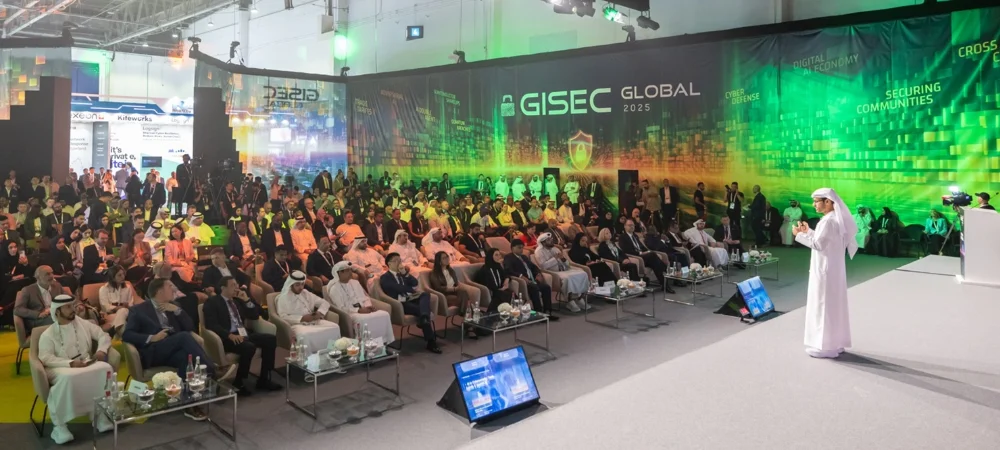
GISEC Global, the world’s third largest cybersecurity event and the Middle East and Africa’s most influential cybersecurity platform, will open its 15th edition this month having expanded 20% year-on-year, reflecting increasing international demand for cybersecurity innovation, collaboration and investment.
Hosted and endorsed by the UAE Cyber Security Council, Dubai Electronic Security Centre (DESC), Ministry of Interior and Dubai Police, GISEC Global 2026 will bring together more than 25,000 cybersecurity professionals, 750+ exhibiting brands, 350+ expert speakers and participants from 180+ countries to address the defining cybersecurity challenges shaping the future of the global digital economy.
H.E. Dr Mohamed Al Kuwaiti, Head of the UAE Cyber Security Council, said: “Artificial Intelligence, geopolitical instability and the rapid evolution of digital technologies are fundamentally reshaping the cybersecurity landscape. As cyberthreats become increasingly sophisticated and interconnected, no single nation or organisation can address these challenges alone.
“The UAE is committed to fostering international collaboration, advancing cyber-resilience and building trusted digital ecosystems that enable innovation and sustainable economic growth.
“GISEC Global 2026 will bring together governments, industry and the global cybersecurity community to develop practical solutions that help safeguard our shared digital future.”
H.E. Yousuf Hamad Al Shaibani, Chief Executive of the Dubai Electronic Security Centre said: “GISEC Global has consistently been an important platform for DESC to engage with the cybersecurity community, exchange expertise and advance Dubai’s cyber-resilience. This year, we are building on that momentum with the second editions of two of our flagship competitions, the Dubai Cyber Challenge – Government Edition and the School of Cyber defence, giving university students across the UAE an opportunity to demonstrate and develop their skills.
“Together, they reflect our continued investment in strengthening cyber capabilities at every level, from developing the next generation of talent to advancing the skills of professionals safeguarding our government entities.
“Our participation this year will also go beyond the competitions, with new initiatives and developments that reflect DESC’s continued focus on anticipating emerging challenges and strengthening Dubai’s cybersecurity ecosystem. We look forward to unveiling more at GISEC Global 2026.”
Cyber First: A new era of cybersecurity leadership
Reflecting cybersecurity’s growing role in national resilience, economic competitiveness and digital trust, GISEC Global 2026 introduces Cyber First as its overarching strategic theme and thought leadership platform, recognising that cybersecurity has evolved beyond a technical discipline to become a boardroom, government and national priority.
At the heart of Cyber First is the new Cyber First Leadership Summit, which will bring together ministers, national cyber authorities, global CISOs and technology leaders to examine the geopolitical impact of Artificial Intelligence, digital sovereignty, nation-state cyberthreats and the resilience of tomorrow’s digital economies.
The expanded conference programme reflects a rapidly evolving cyber landscape, where artificial intelligence, quantum computing, dual-use technologies, geopolitical instability and critical infrastructure resilience are reshaping the global security agenda.

